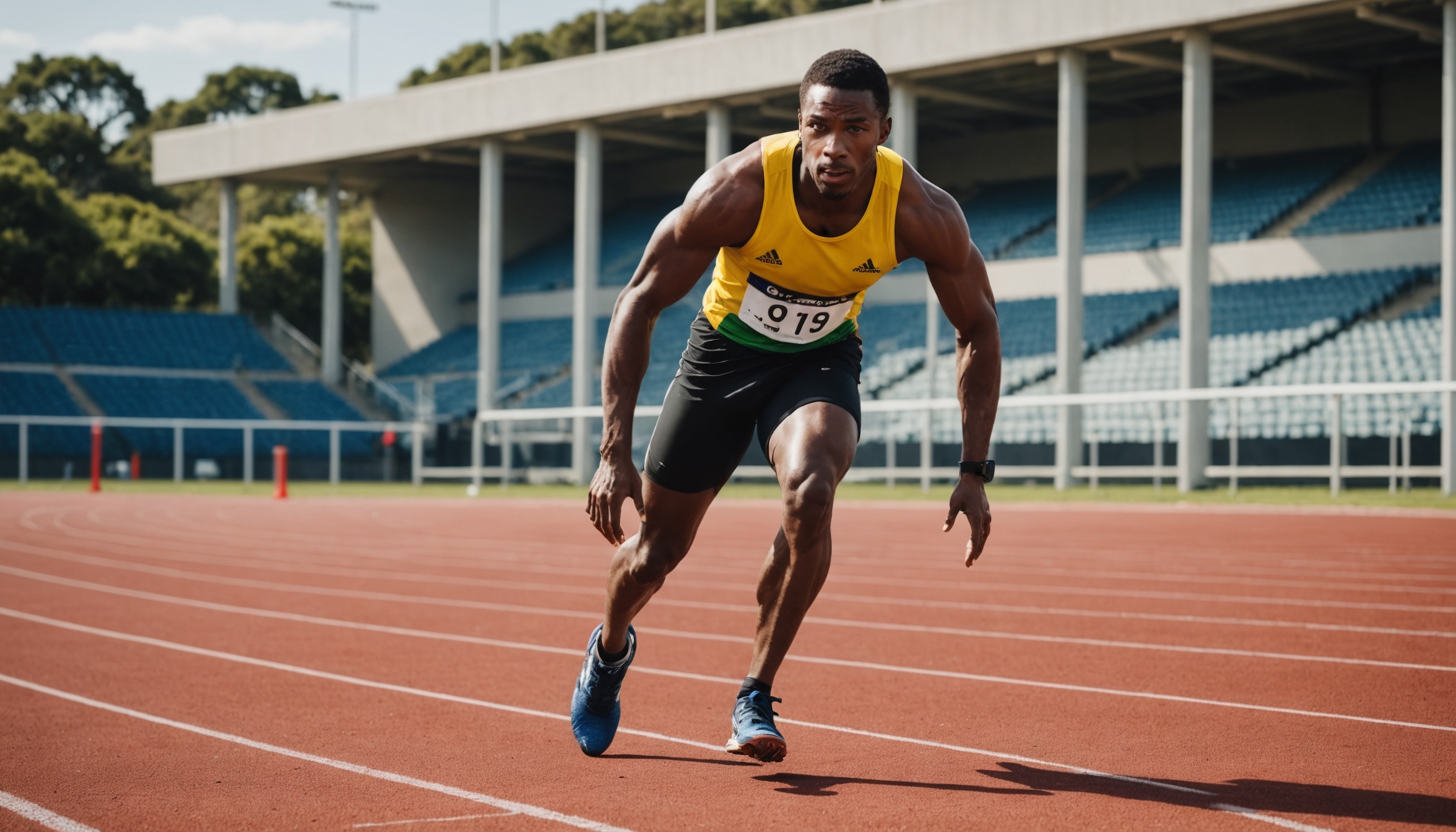
sprint training for athletes represents one of the most effective methods to build explosive power, improve acceleration, and develop competitive speed across all sports. Whether you’re a football wide receiver, basketball point guard, soccer midfielder, or track sprinter, mastering sprint training techniques can transform your athletic performance and give you the edge over your competition.
The Science Behind Effective Sprint Training
Understanding Sprint Physiology and Energy Systems
Sprint training for athletes works by engaging specific muscle fibers and energy systems that standard endurance training cannot develop. When you perform high-intensity sprints, your body primarily relies on the phosphocreatine system for the first 10 seconds and anaerobic glycolysis for efforts lasting 10-60 seconds. This metabolic demand triggers neurological adaptations that improve your ability to recruit muscle fibers rapidly and generate force quickly. The sport science behind sprint training emphasizes that explosive movements require coordinated activation of fast-twitch muscle fibers, which are largely dormant during moderate-intensity exercise.
The neuromuscular adaptations from sprint training for athletes extend beyond simply running faster. Your central nervous system learns to improve motor unit synchronization, meaning more muscle fibers contract simultaneously and in proper sequence. This neurological improvement often precedes significant strength gains, which is why athletes frequently report feeling “faster” even before visible muscle development occurs. Additionally, sprint training stimulates the production of anabolic hormones like testosterone and growth hormone, creating an optimal hormonal environment for athletic development and muscle growth.
Sprint Training Frequency and Recovery Requirements
Proper recovery is absolutely critical for sprint training for athletes because the intensity of maximum-effort sprints creates substantial neuromuscular fatigue. Most elite athletes perform high-intensity sprint work only 2-3 times per week, with at least 48 hours between sessions targeting the same muscle groups. Recovery between individual sprints matters equally—adequate rest intervals between repetitions allow your phosphocreatine stores to regenerate, enabling subsequent sprints to maintain quality and power output. Cutting recovery short compromises performance and increases injury risk.
The periodization of sprint training for athletes should follow structured phases throughout your competitive season. Early preparatory phases focus on building general speed and technical proficiency, mid-season phases emphasize maintenance and sport-specific application, and peaking phases reduce volume while maintaining intensity. Athletes who ignore periodization principles risk plateauing or, worse, overtraining. Incorporating adequate sleep (7-9 hours), proper nutrition with sufficient carbohydrates and protein, and strategic use of active recovery days ensures your body can adapt positively to the demands of sprint training.
Essential Warm-Up Protocols for Sprint Training
Dynamic Mobility and Activation Sequences
Before beginning any sprint training for athletes, implementing a comprehensive warm-up is non-negotiable. A proper warm-up serves multiple critical functions: elevating core temperature, increasing blood flow to working muscles, improving neural activation, and preparing connective tissues for explosive movement. Start with 5-10 minutes of light aerobic activity such as jogging, cycling, or rowing at conversational intensity to gradually elevate your heart rate and increase circulation throughout your body.
Dynamic mobility work should follow your initial aerobic warm-up and specifically target the hip, ankle, and thoracic spine—areas critical for sprinting mechanics. Perform movements like leg swings (forward/back and lateral), walking lunges, inchworms, and quadruped exercises for 8-10 repetitions each. These dynamic stretches maintain mobility while promoting activation of stabilizer muscles. Include glute activation exercises such as bodyweight glute bridges, single-leg Romanian deadlifts, and lateral band walks, as weak glutes are one of the most common reasons for poor sprinting mechanics and injury.
Movement Pattern Rehearsal and Acceleration Drills
Following dynamic mobility work, sprint training for athletes requires specific movement pattern rehearsal to ingrain proper mechanics before high-speed effort. Perform A-skips and B-skips, which develop proper knee drive and coordination. High knee runs at submaximal speeds allow your nervous system to rehearse the movement pattern without the injury risk associated with maximal-effort sprints. These drills should feel smooth and coordinated, not rushed or forced.
Include 3-4 progressive acceleration runs at 50%, 70%, 85%, and 95% intensity before initiating maximum-effort sprints. These progressive runs serve as a bridge between warm-up exercises and competition-intensity efforts. They allow your nervous system to gradually adjust to increasing speeds while monitoring movement quality. Watch for any discomfort or mechanical breakdown—if something doesn’t feel right during these progressive runs, reduce intensity or postpone sprint training for athletes until you’ve addressed the underlying issue. A proper warm-up typically requires 15-20 minutes total and should leave you feeling primed and ready, not fatigued.
Sprint Training Workout Structures and Programming
High-Intensity Interval Training Approaches
Sprint training for athletes typically follows several distinct workout structures, each serving different development goals. High-intensity interval training (HIIT) alternates between maximum-effort sprints and recovery periods. Classic HIIT for sprint development includes repetitions like 6-8 x 30 meters with 60-90 seconds rest, or 4-6 x 60 meters with 2-3 minutes rest. The shorter distance repeats develop initial acceleration and rate of force development, while longer repeats build maximum velocity and speed endurance. Many coaches combine both distances within a single session, progressing from longer repeats early in a training block to shorter repeats later, as athletes develop fatigue resistance.
Another effective sprint training for athletes structure is flying sprints, where athletes build up to top speed over a distance, then maintain that speed for a measured segment. For example, a 20-meter acceleration phase followed by a 30-meter flying sprint develops maximum velocity specifically. Flying sprints are particularly valuable for team sports athletes who must quickly reach top speed during game situations. Repeat counts for flying sprints typically range from 4-6 repetitions with complete recovery between efforts. Include at least one HIIT session weekly during competitive seasons, but avoid stacking multiple high-intensity sprint sessions within 48 hours.
Sport-Specific Sprint Integration
Effective sprint training for athletes extends beyond straight-line sprinting by incorporating sport-specific movements and decision-making elements. Football players benefit from resisted sprints, lateral shuffles, and deceleration work simulating game demands. Basketball players should train multi-directional sprints with cutting and sudden direction changes. Soccer athletes require sustained sprinting with frequent acceleration and deceleration. Rather than isolating pure speed development, integrate sprint training into game-realistic scenarios where possible, such as sprinting to react to coach signals or competing with teammates.
Resisted sprint training—performed with sleds, parachutes, or partner-assisted bands—develops explosive acceleration power without the eccentric loading that sometimes causes hamstring strains. Resisted sprints should comprise no more than 20-30% of your total sprint volume and work best when performed early in workouts when you’re fresh. Similarly, overspeed training using downhill sprints or assisted methods can help athletes experience running at speeds exceeding their current maximum velocity. These methods provide neural stimulation that translates to improved natural speed, but should represent only a small portion of total sprint training volume due to increased injury risk.
| Workout Type | Distance | Repetitions | Rest Period | Primary Benefit |
|---|---|---|---|---|
| Acceleration Development | 20-30 meters | 6-8 reps | 60-90 seconds | Initial acceleration power |
| Maximum Velocity | 40-60 meters | 4-6 reps | 2-3 minutes | Top-end speed development |
| Speed Endurance | 80-150 meters | 3-4 reps | 3-5 minutes | Maintaining speed when fatigued |
| Flying Sprint | 20m build + 30-40m effort | 4-5 reps | Complete recovery | Maximum velocity in game context |
| Resisted Sprint | 20-30 meters with load | 5-6 reps | 2-3 minutes | Acceleration strength development |
Technical Mechanics and Proper Sprint Form
Optimal Running Posture and Ground Contact
Proper mechanics represent the foundation of effective sprint training for athletes because even small technical deficiencies multiply across hundreds of repetitions, wasting energy and limiting performance. During the acceleration phase, maintain a forward body lean of approximately 45 degrees, allowing gravity to assist your forward progression. Your center of mass should stay ahead of your base of support, driving power into the ground through a high knee position. Focus on explosive hip extension—the power for sprinting primarily comes from your glutes, hamstrings, and hip extensors, not simply leg turnover.
Ground contact time significantly impacts sprint training effectiveness. Elite sprinters contact the ground for only 80-100 milliseconds per step while maintaining rapid ground contact frequency. To develop efficient ground contact, focus on powerful push-off rather than reaching forward with your leg. Many athletes unnecessarily overextend their leg forward, increasing ground contact time and reducing power. During sprint training for athletes, cue yourself to “punch the ground” and maintain an upright posture once you’ve achieved maximum velocity. Vertical oscillation—bouncing up and down—wastes energy that should contribute to forward propulsion.
Arm Mechanics and Coordination Patterns
Arm action during sprint training directly influences leg speed and running efficiency through neuromuscular coupling. Your arms should drive up and forward with high elbows—imagine driving your elbows backward rather than thinking about pushing your arms forward. At maximum velocity, your arms create a cadence that coordinates with your leg turnover frequency. During acceleration, emphasize more forceful arm action with greater amplitude to drive leg power. Arms bent approximately 90 degrees at the elbow optimizes the mechanical advantage for creating speed.
Many athletes neglect arm mechanics during sprint training for athletes, but improving arm action often yields immediate speed improvements. Practice arm swing during your warm-up drills, focusing on rhythm and coordination. Maintain relaxed shoulders and avoid excessive upper body tension, which restricts movement. The key is coordinated opposite-arm-opposite-leg action synchronized with your running cadence. Some coaches use verbal cues like “pump” or “drive” to help athletes accelerate arm action during high-intensity efforts. Poor arm mechanics often indicate fatigue or neuromuscular fatigue accumulation, serving as an important signal to complete your workout.
Strength and Power Development for Sprint Performance
Lower Body Strength Training Protocols
Complementing sprint training for athletes with targeted strength work amplifies power development and injury resilience. Compound movements like squats, deadlifts, lunges, and step-ups build fundamental lower body strength foundational to sprinting. Perform these exercises 2-3 times weekly using moderate to heavy loads (6-8 repetitions per set for strength, 8-12 for hypertrophy) on days separate from high-intensity sprint sessions. The combination of heavy strength training and high-intensity sprint work on the same day creates excessive fatigue that compromises the quality of both stimulus.
Unilateral exercises deserve particular emphasis in sprint training for athletes because running is inherently a unilateral activity. Single-leg squats, split squats, Bulgarian split squats, and single-leg deadlifts develop bilateral symmetry and unilateral strength crucial for injury prevention. Many athletes exhibit significant strength asymmetries between legs that predispose them to injury. Addressing these imbalances through unilateral training reduces injury risk considerably. Include eccentric-emphasized movements like eccentric hamstring curls and lengthening Romanian deadlifts to strengthen the hamstrings through their full range of motion, directly protecting against hamstring strain—the most common sprint training injury.
Plyometric Training and Reactive Power Development
Plyometric exercises train your muscles to apply maximum force in minimal time, directly supporting sprint training for athletes. Box jumps, bounding, lateral bounds, and depth jumps develop reactive power and elastic properties of muscles and tendons. Perform plyometrics 1-2 times weekly using low repetitions (5-8 per set) and complete recovery between efforts, as the quality of movement is paramount. Poor-quality plyometrics with fatigue accumulated during the set diminish benefits and increase injury risk. Always perform plyometric training when fresh, typically early in workouts after warm-up.
Implement plyometric progressions thoughtfully—begin with double-leg exercises and simple movements before advancing to single-leg variations or complex combinations. A beginner might start with basic box jumps and progress to depth jumps only after demonstrating consistent landing mechanics. During sprint training for athletes, apply plyometric training 48-72 hours before competition and high-intensity sprint sessions to ensure full neural recovery. The combination of strength training, sprint training, and plyometrics creates optimal conditions for power development when properly sequenced and recovered from.
- Perform compound lifts (squats, deadlifts) twice weekly with 2-3 minutes rest between sets
- Include unilateral exercises for 40-50% of lower body training volume
- Execute plyometrics when fresh, with complete recovery between repetitions
- Progress plyometric complexity gradually over 4-6 week blocks
- Separate heavy strength days from maximum-effort sprint sessions by at least 48 hours
- Track movement quality—fatigue is the enemy of force development during sprint training
Injury Prevention and Common Sprint Training Mistakes
Identifying and Correcting Movement Compensations
Sprint training for athletes places significant stress on muscles, joints, and connective tissues, making injury prevention absolutely critical. Common movement compensations during sprinting include excessive knee valgus (inward collapse), asymmetrical loading favoring one leg, and loss of trunk stability when fatigued. These compensations typically result from weakness in hip stabilizers, bilateral strength imbalances, or core instability. Video analysis of your sprinting form can reveal these issues—most athletes exhibit movement quality deterioration as they fatigue, indicating the need for additional core and hip stability work.
Addressing movement compensations requires targeted corrective exercises performed consistently 3-4 times weekly. Strengthen hip abductors and external rotators through side-lying clamshells, band walks, and Copenhagen exercises. Improve anterior core stability with planks and dead bugs. Develop posterior chain resilience with Nordic hamstring curls and eccentric hamstring work. Prevention is far more effective than rehabilitation—investing in proper movement quality before injury occurs protects your training consistency. Many athletes underestimate the importance of accessory work, but the extra 10-15 minutes daily spent on mobility and stability work pays enormous dividends in terms of staying healthy and training consistently.
Recovery Strategies and Overtraining Recognition
Overtraining represents the most common mistake in sprint training for athletes, particularly motivated individuals pushing harder when improvement plateaus. Recognize overtraining symptoms including persistent fatigue despite adequate sleep, declining sprint performance, elevated resting heart rate, increased injury frequency, mood disturbance, and recurring minor illnesses. When these symptoms appear, reduce training intensity and volume by 40-50% for 5-7 days rather than pushing harder—this recovery microcycle typically restores performance and motivation.
Recovery modalities supporting sprint training for athletes include foam rolling, massage, contrast water immersion, and compression garments—though research shows their benefits are modest compared to sleep and nutrition. Prioritize 7-9 hours of quality sleep nightly, as this is when your body performs most adaptation and muscle protein synthesis. Consume adequate carbohydrates (3-7 grams per kilogram body weight depending on training volume) and protein (1.6-2.0 grams per kilogram) daily. Post-workout nutrition within 60 minutes after sprint training sessions accelerates recovery by providing amino acids and carbohydrates when your body is primed to absorb them. Underfueling is rampant among athletes and dramatically compromises sprint training quality and adaptation.
- Assess movement quality using video or coaching feedback before every sprint session
- Perform hip and core stability work 3-4 times weekly as prehabilitation
- Monitor sleep quality and aim for 7-9 hours minimum nightly
- Consume 3-7g carbohydrates and 1.6-2.0g protein per kilogram body weight daily
- Take a recovery microcycle (reduced volume/intensity) every 3-4 weeks
- Listen to your body—persistent fatigue is a signal to reduce training stress
- Include static stretching and foam rolling for 10-15 minutes post-workout
Frequently Asked Questions About Sprint Training for Athletes
How often should I perform sprint training for athletes?
The optimal frequency for sprint training for athletes typically ranges from 2-3 high-intensity sessions weekly during competitive seasons, with adequate recovery between sessions. Most elite athletes perform maximum-effort sprints no more than twice weekly because the neuromuscular demand requires substantial recovery. Team sports athletes might perform 1-2 dedicated speed sessions weekly supplemented with competitive sprinting during practices. During off-season preparation phases, you might include 3-4 speed sessions weekly when overall training volume is lower and recovery capacity is higher. The key is avoiding excessive fatigue accumulation that impairs movement quality—one high-quality sprint session beats three mediocre sessions. Monitor your performance across sessions; declining sprint times despite rest indicate inadequate recovery or overtraining.
What’s the best age to start sprint training for athletes?
Sprint training for athletes can begin in childhood using age-appropriate methods emphasizing technique over intensity. Young athletes (under 12) benefit primarily from movement quality development, speed-oriented play, and low-intensity acceleration work. As athletes mature into adolescence (12-16 years), you can gradually increase sprint training intensity and volume while continuing to emphasize proper mechanics. Post-pubescent athletes can handle the full spectrum of sprint training for athletes including high-intensity intervals, plyometrics, and heavy strength training. The nervous system matures earlier than the skeletal system, so young athletes often develop exceptional speed potential with proper coaching even if they lack significant strength. Never sacrifice technique for speed in youth athletes—the motor patterns ingrained early establish the foundation for lifetime athletic development.
Can sprint training for athletes help with sports other than track and field?
Absolutely—sprint training for athletes benefits virtually every sport requiring explosive power and acceleration. Football players of all positions develop competitive advantages through improved acceleration and maximum velocity. Basketball players use sprint training to beat defenders off the dribble and transition quickly from defense to offense. Soccer athletes need repeated acceleration ability for both offensive and defensive situations. Baseball players improve both baserunning speed and throwing velocity through sprint-specific power development. Even endurance sports like rowing benefit from sprint training to develop the explosive start power and race-finishing speed. The key to sport-specific benefit is integrating sprint training movements into sport-realistic situations—straight-line sprinting alone provides limited benefit for multi-directional sports, but laterally integrated sprint drills directly transfer to game performance.
How quickly will I see results from sprint training for athletes?
Neural adaptations from sprint training for athletes often produce noticeable improvements within 2-3 weeks, meaning many athletes feel and perceive themselves running faster before physiological changes become obvious. Measured improvements in sprint times and acceleration typically emerge within 4-6 weeks of consistent, quality training. Significant strength and muscle mass development requires 8-12 weeks minimum. However, results depend heavily on training consistency, recovery quality, and nutrition
One thought on “Sprint Training for Athletes: Ultimate Guide to Speed”